Build around one coherent damage plan
- A reliable Wanderburg build starts with one coherent damage plan. Use a front-ram plan when the run lets you stack speed, melee damage and stun effects around the same attack pattern. The documented example works because those bonuses reinforce one another rather than pulling the build in unrelated directions.
- Treat modules and artifacts as the supporting system. New modules and vehicles can be unlocked between runs, while artifacts can reinforce categories such as melee, magic, arrows, fire and speed.
- Use module upgrades to strengthen the job that module already performs. Documented module improvements include extra damage, lower cooldowns, automation and additional effects, giving you several ways to deepen one coherent setup.
- Keep alternative module families in mind before locking into close-range play. The documented arsenal includes mortars, mines, side cannons and barracks, so a ram build is one supported route rather than the only weapon framework.
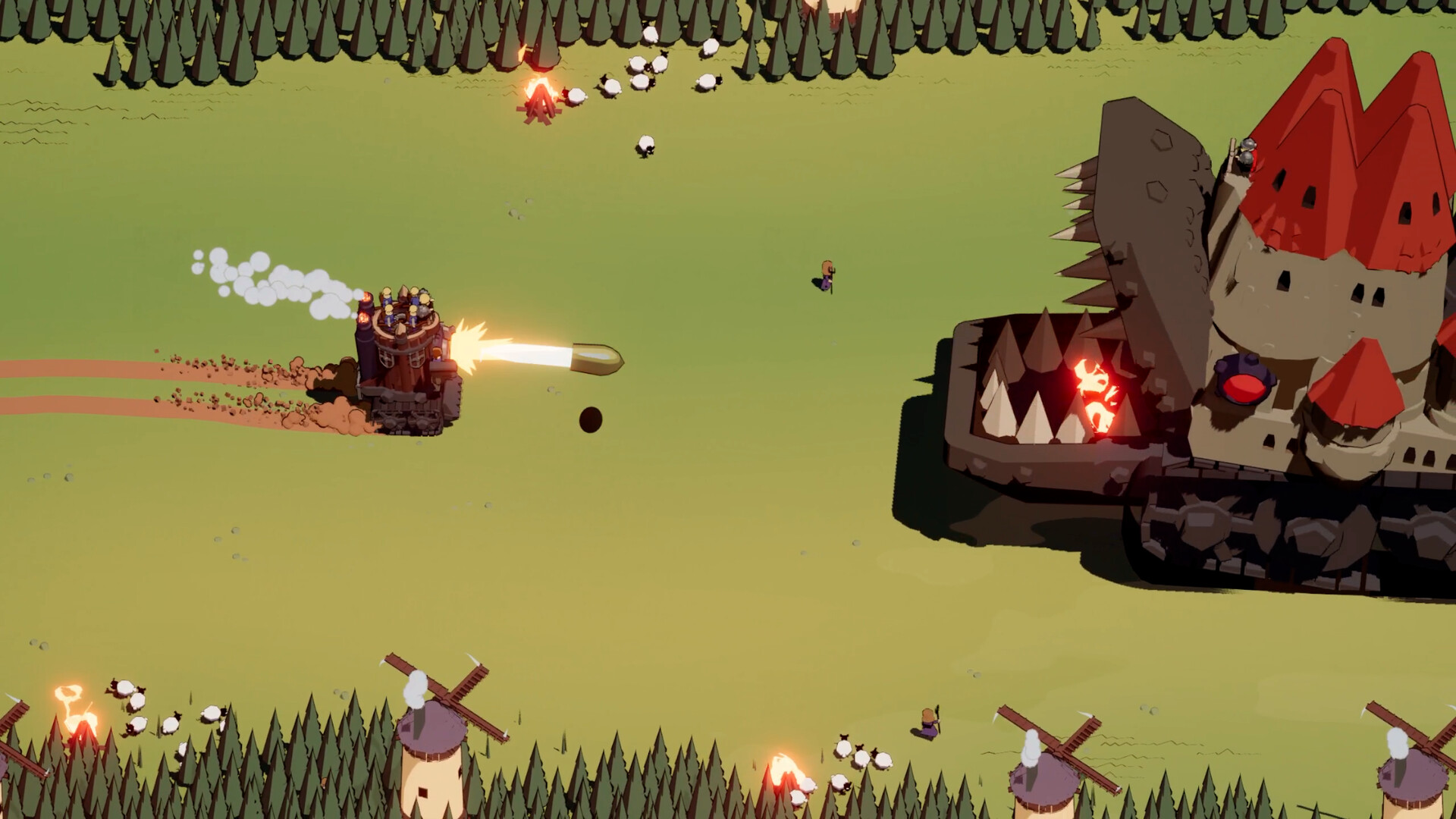
Watch the documented build overview to see the movement, module and artifact framework demonstrated before copying the plan.Playing this video connects to YouTube.
Drive the ram build deliberately
- Start by prioritizing the ram’s speed, melee-damage and stun synergies instead of spreading upgrades across unrelated plans.
- Steer and position the fortress before committing. Turning takes time, and mounted-weapon damage depends on putting the castle in the correct position for the weapon you intend to use.
- Manage boost as part of the attack sequence rather than as permanent movement. Steering, dodging, boost management, target selection and active-ability timing are all part of the documented piloting workload.
- Commit to stronger enemy fortresses only after you have a build and position that can handle them. Small troops and villages are growth resources, while larger fortresses are the enemies that can completely destroy a run.
- After each engagement, keep reinforcing the same plan through modules, artifacts and upgrades instead of converting the run into a mixture of unrelated bonuses.
Tradeoffs, timing and fallback choices
The ram plan demands positioning discipline because fortress turning takes time and mounted weapons rely on correct orientation. Stronger castles remain dangerous, which makes steering and target selection as important to the build as the upgrade stack itself.
Boost also has a current timing constraint: hotfix 0.9.8 makes Nitro regeneration begin 0.5 seconds after boost use. Build execution should therefore account for that recovery window when planning the next movement decision.
When the run favors another combat role, move toward a documented alternative. Mortars provide a ranged option, mines work behind the fortress, side cannons attack from the flanks, and barracks deploy soldiers.